
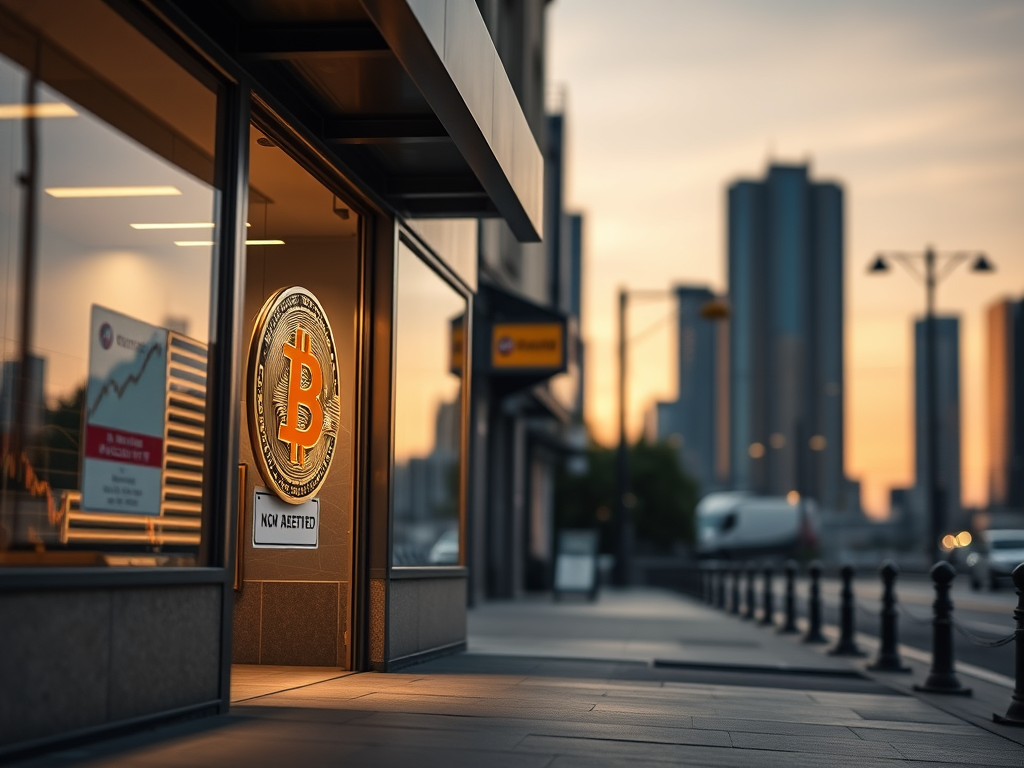
Bitcoin has long been promoted as a revolutionary payment system, but recent trends suggest many retailers are losing interest in accepting Bitcoin as a form of payment. This has raised a key question for investors and crypto enthusiasts alike:
What Does “Retailers Losing Interest in Bitcoin” Mean?
The phrase can refer to two related but distinct trends:
1. Fewer Merchants Accepting Bitcoin Payments
Some businesses that once accepted Bitcoin have quietly removed it as a payment option. Common reasons include:
- Price volatility
- Accounting and tax complexity
- Slow transaction times compared to credit cards
- Limited customer demand
This suggests Bitcoin is struggling to gain traction as an everyday payment currency.
2. Declining Retail Investor Participation
“Retail” can also refer to individual investors, not merchants. During certain market phases:
- Fewer small investors buy Bitcoin
- On-chain activity from smaller wallets declines
- Trading volume shifts toward institutions and large holders
This matters more for price than merchant adoption alone.
Does Retailer Disinterest Hurt Bitcoin’s Price?
Short-Term Impact: Possible, But Limited
In the short term, reduced retail participation can:
- Lower buying pressure
- Reduce momentum during rallies
- Increase volatility due to fewer active participants
Retail investors often drive hype cycles, so when they step back, price action can appear weaker or more range-bound.
However, merchant adoption alone has historically had very little direct impact on Bitcoin’s market price.
Why Bitcoin’s Price Is Not Driven by Retail Payments
Despite early narratives, Bitcoin is no longer primarily valued as a payment system. Instead, markets now treat Bitcoin as:
- A store of value
- A scarce digital asset
- A macro hedge against currency debasement
- A speculative and institutional investment vehicle
Because of this shift, Bitcoin’s price is driven far more by investment demand than by how often it’s used to buy coffee or retail goods.
What Actually Drives Bitcoin’s Price?
1. Supply and Demand
Bitcoin has a fixed supply of 21 million coins. Price moves when demand increases relative to that limited supply.
2. Institutional Adoption
Institutional factors now dominate price action, including:
- Bitcoin ETFs
- Hedge fund positioning
- Corporate treasury allocations
- Sovereign and pension interest
Institutional inflows can outweigh declining retail activity by orders of magnitude.
3. Macroeconomic Conditions
Bitcoin is highly sensitive to:
- Interest rate expectations
- Inflation data
- Liquidity conditions
- Risk-on vs risk-off sentiment
Retail payment adoption barely registers compared to these forces.
4. Market Sentiment and Cycles
Bitcoin historically moves in cycles:
- Retail investors tend to enter near market tops
- Institutions accumulate during quieter phases
- Reduced retail interest can actually signal a base-building phase
Does Merchant Adoption Matter at All?
Yes — but mostly for long-term narrative, not near-term price.
Merchant adoption helps:
- Improve public perception
- Increase legitimacy
- Support long-term utility narratives
However, Bitcoin doesn’t need to replace Visa or Mastercard to maintain or grow its value. Other layers and networks handle payments more efficiently, while Bitcoin increasingly plays the role of settlement layer and digital reserve asset.
Could Declining Retail Interest Ever Be a Real Problem?
Retail disinterest becomes a concern only if it coincides with:
- Falling institutional demand
- Negative macro conditions
- Regulatory crackdowns
- Liquidity tightening
In isolation, retail pullback is not enough to cause a sustained Bitcoin bear market.
Summary: Will Retailers Losing Interest in Bitcoin Hurt the Price?
Short answer: Not significantly on its own.
Key Takeaways:
- Merchant adoption has little direct impact on Bitcoin’s price
- Retail investor activity affects short-term volatility, not long-term value
- Institutional demand and macro trends are the dominant price drivers
- Bitcoin is increasingly viewed as a store of value, not a payment currency
Bottom line:
Retailers losing interest in Bitcoin payments may slow mainstream usage, but it is unlikely to meaningfully hurt Bitcoin’s price unless broader investment demand weakens as well.
Leave a Reply